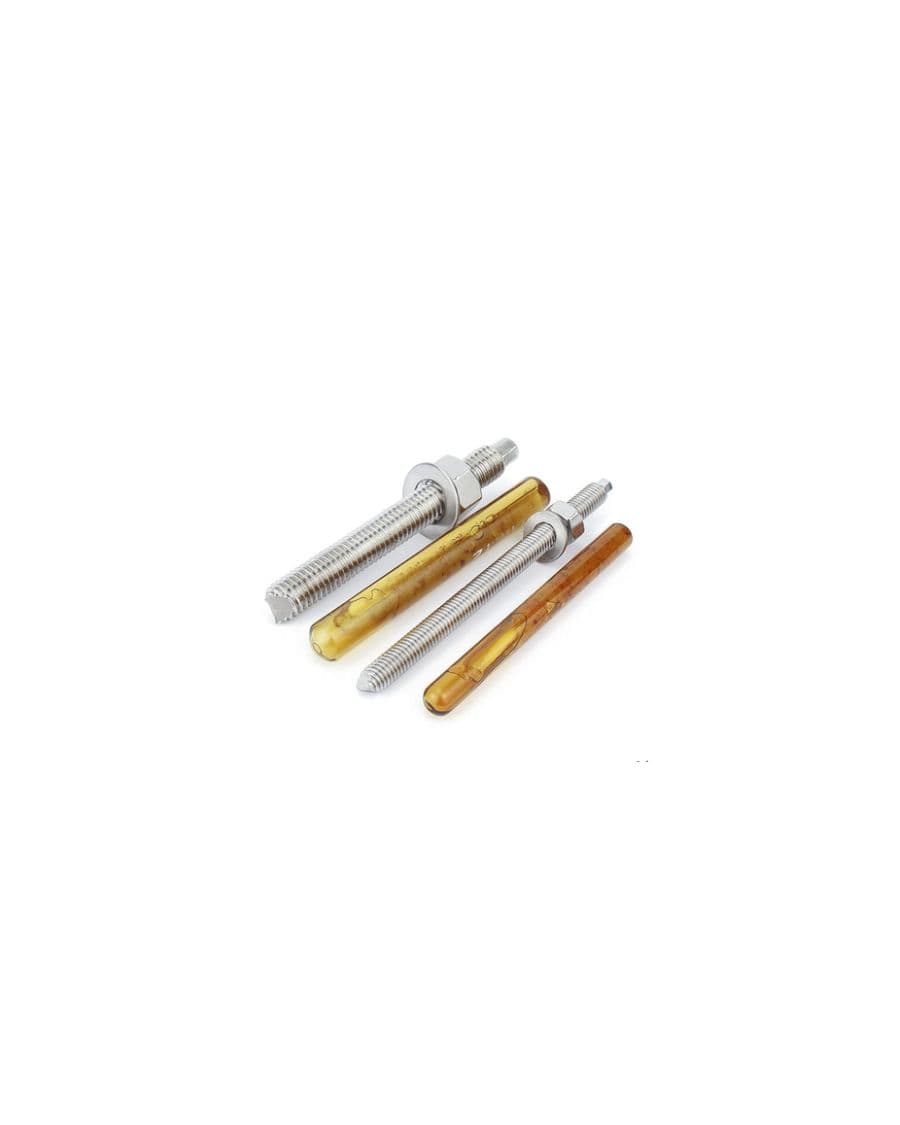
A chemical anchor is a bonded anchor: a threaded stud or internal-threaded sleeve is fixed into a prepared hole with a chemical resin or capsule. The resin transfers load between the steel element and the base material. It is not a mechanical expansion anchor, and it should not be quoted from a diameter alone.
The useful RFQ starts with the base material and the hole condition. If those are missing, the supplier can only quote a nominal part, not a system that the project engineer can approve.
What is a chemical anchor?
A typical chemical anchor system includes:
- a threaded stud, rod or internal-threaded sleeve;
- a resin cartridge or glass capsule;
- a mixing nozzle or injection tool where required;
- a nut, washer or connection component;
- the drilling, cleaning and curing procedure specified by the system.
The anchor is installed by drilling a hole to the specified diameter and depth, cleaning it to the required condition and placing the resin. The stud is inserted before the resin cures. The final performance depends on the complete system and the installation conditions, not on the steel stud alone.
Why is the base material the first input?
Concrete is not a single material. The anchor selection may depend on:
- concrete strength and age;
- normal-weight or lightweight concrete;
- reinforced or unreinforced concrete;
- cracked or uncracked condition;
- presence of voids, honeycombing or unknown fill;
- base material thickness and edge distance.
For masonry, the anchor system and the approval must match the actual block or brick. A chemical anchor approved for a particular concrete condition is not automatically approved for hollow block.
If the base material is unknown, drill a trial hole or obtain a core result before choosing the anchor. Do not fill an unknown substrate with a larger quantity of resin and call it a solution.
Why does hole cleaning matter so much?
Bonded anchors rely on the interface between the resin and the cleaned hole wall. Dust, water, oil or debris reduces that interface. The installation procedure normally specifies the drill type, hole diameter, depth, brushing and blowing sequence.
The RFQ should state who is responsible for installation and whether the project requires the installer to be trained or approved by the system manufacturer. A supplier can provide the product and the published installation instructions; it cannot guarantee a hole that was not prepared to those instructions.
What should be on the drawing or specification?
| Item | Why it matters |
|---|---|
| Anchor type | Stud, internal-threaded sleeve or capsule system |
| Diameter and thread | Defines the steel element and connection |
| Effective embedment | Must come from the approved system data |
| Base material | Concrete, masonry or another substrate |
| Hole diameter and depth | Must match the system, not be guessed on site |
| Edge and spacing | Depends on the design and the system |
| Corrosion protection | Zinc-plated, stainless or another specified finish |
| Fire or seismic requirement | May change the approved system |
| Curing temperature | Affects working time and cure time |
| Document requirement | Test report, declaration, SDS or installation instruction |
What documents should an RFQ ask for?
Ask for the documents that apply to the exact product and size being quoted. Depending on the project, this may include:
- the manufacturer's installation instructions;
- the product data sheet and curing schedule;
- a declaration of performance or test report for the relevant base material;
- the safety data sheet;
- batch marking and traceability information;
- the certificate requested by the project specification.
Do not accept a generic certificate for a different diameter, base material or anchor family. The document reference should match the product being supplied.
What should be in the RFQ?
Send:
- Base material and condition, including cracked or uncracked if known.
- Anchor diameter, thread and connection detail.
- Required embedment or the design document that defines it.
- Hole diameter and depth, if already specified.
- Edge distance, spacing and base thickness.
- Loading type and design responsibility, without asking the supplier to invent a capacity.
- Corrosion and fire requirements.
- Installation temperature and site conditions.
- Quantity by size and required packing.
- Document, test and approval requirements.
Common mistakes
- Calling a chemical anchor an expansion anchor. The installation and load transfer are different.
- Giving only the thread size. Resin, embedment, hole condition and base material are missing.
- Skipping hole cleaning. The best cartridge cannot bond to a dusty hole.
- Using a document for the wrong size. Check that the report covers the product and diameter quoted.
- Ignoring cure temperature. A cold site may require a different working and curing time.
- Treating a catalogue value as a project approval. The project engineer must confirm the design.
Tangtie's chemical anchor scope
Tangtie supplies chemical anchors as part of its curtain wall accessories range. The product is confirmed as available; the correct resin, stud, embedment and document package must be confirmed for the project. Tangtie does not sell expansion, wedge, sleeve or drop-in anchors.
Next step: send the base material, anchor size, embedment, edge distance and required document list. The quotation can then identify the exact system and the installation controls that need project approval.
This note is general technical guidance prepared for the product library. It is not a project-specific approval and does not replace the specification issued by the project engineer. Values requiring test evidence are not published.