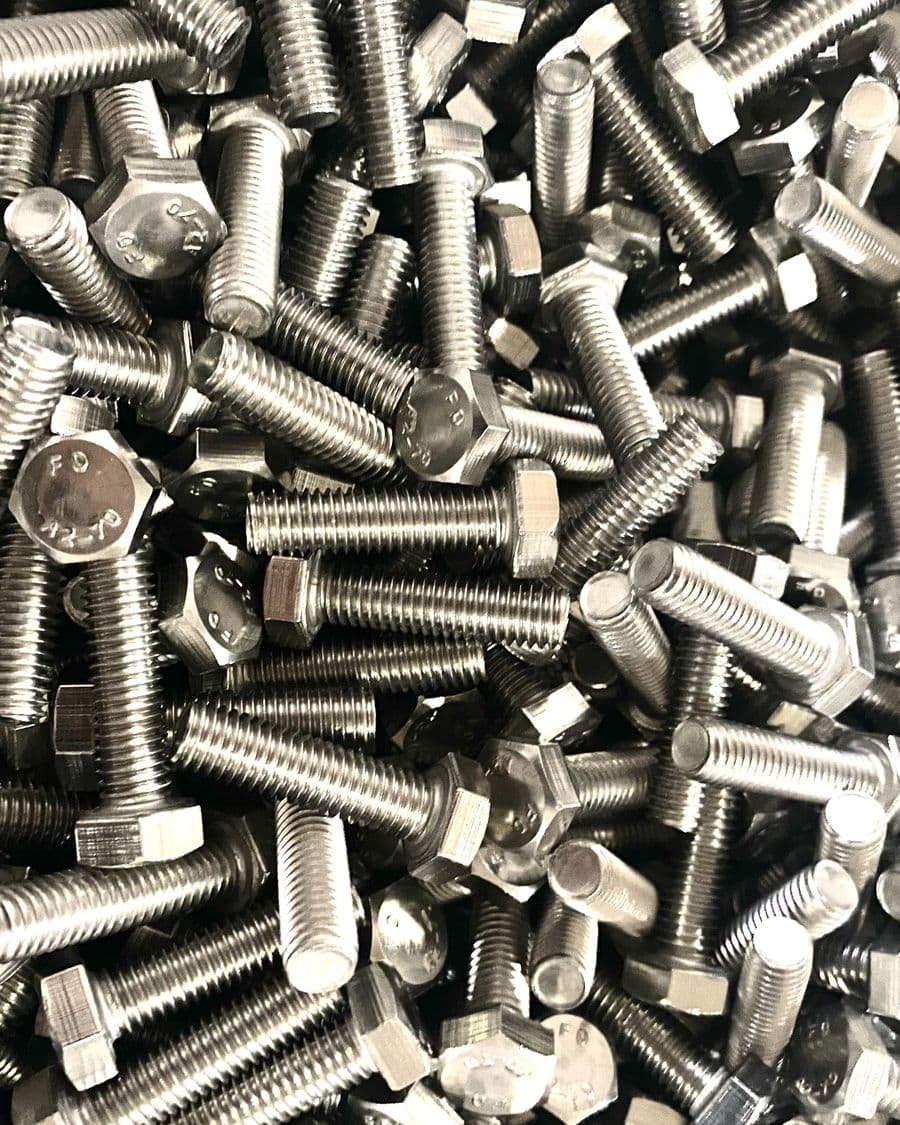
Stainless steel fasteners are common in curtain wall and exterior metalwork because they can provide corrosion resistance without relying on a painted or plated coating. The grade, finish and installation method still have to be specified. “Stainless” is a family of materials, not a single product.
Two issues cause most facade fastener problems: choosing 304 where the environment needs 316, and galling the threads during installation. Both can be controlled at the specification and RFQ stage.
What is the difference between 304 and 316?
304 is an austenitic stainless steel containing chromium and nickel. It is widely used for general indoor and less aggressive outdoor conditions. 316 contains molybdenum in addition, which generally improves resistance to chlorides.
In facade work, 316 is often specified for coastal, marine or de-icing-salt exposure. That does not make it automatically correct for every project. The actual environment, cleaning regime, surface finish, temperature and project specification decide the grade.
| Item | 304 / A2 | 316 / A4 |
|---|---|---|
| Typical use | General facade and interior connections | More corrosive or chloride-bearing environments |
| Chloride resistance | Lower than 316 in general | Generally improved by molybdenum |
| Magnetic response | Usually non-magnetic in the annealed condition | Usually non-magnetic in the annealed condition |
| Verification | Grade and certificate to be confirmed | Grade and certificate to be confirmed |
| Finish | Mill, pickled, passivated or specified | Mill, pickled, passivated or specified |
The A2 and A4 shorthand is useful for purchasing, but the full grade, property class and finish should be written on the order.
Why do stainless threads gall?
Galling, also called cold welding or thread seizure, can occur when stainless steel surfaces rub under pressure. The protective oxide layer can break down and the two surfaces may transfer material, making the nut difficult or impossible to turn.
It is more likely when:
- the thread is dry;
- the parts are the same grade and hardness;
- installation speed is high;
- the thread is damaged or poorly formed;
- the fastener is repeatedly tightened and loosened;
- the surfaces are not clean.
Use the installation method and lubricant approved for the project. Do not assume that a standard anti-seize product is acceptable for every facade system, and do not use a lubricant that could contaminate the stone or the coating.
What should the drawing specify?
- Product type: bolt, screw, stud, nut, washer or anchor.
- Grade and property class.
- Thread size and pitch.
- Length and thread length.
- Head type and drive.
- Washer type and material.
- Surface finish and passivation requirement.
- Corrosion exposure and cleaning requirement.
- Installation lubricant or galling-control method, if required.
- Marking, traceability and packaging.
What should an RFQ include?
Send the fastener schedule and a sample or drawing. Include the environment, the mating materials, the required grade, the finish and the quantity by size. If the project has a test or certificate requirement, state the exact standard and the component it applies to.
For a mixed package, separate the items by location: facade bracket, hanger, cladding rail, stone fixing and general steelwork. A single “stainless bolts” line is not enough for a controlled purchase.
Common mistakes
- Treating 304 and 316 as interchangeable. The exposure condition may not allow it.
- Specifying stainless but not the finish. Pickling, passivation and surface condition affect performance.
- Using dry stainless nuts and bolts at high speed. This increases the risk of galling.
- Mixing stainless with galvanized steel without a detail. Contact, drainage and isolation should be considered.
- Accepting a generic mill certificate. The certificate should match the supplied grade and batch.
- Using a fastener with the wrong thread length. The nut may not engage the intended number of threads.
Tangtie's fastener scope
Tangtie supplies stainless steel fasteners for facade and general building connections, together with curtain wall hangers and self-drilling screws. Grade, finish, dimensions and documents are confirmed against the approved schedule.
Next step: send the fastener schedule with the exposure condition and the mating materials. The quotation can then separate 304, 316 and coated items instead of treating them as one commodity.
This note is general technical guidance prepared for the product library. It is not a project-specific approval and does not replace the specification issued by the project engineer. Values requiring test evidence are not published.